
How Compact STPs Are Transforming Wastewater Treatment In Urban India
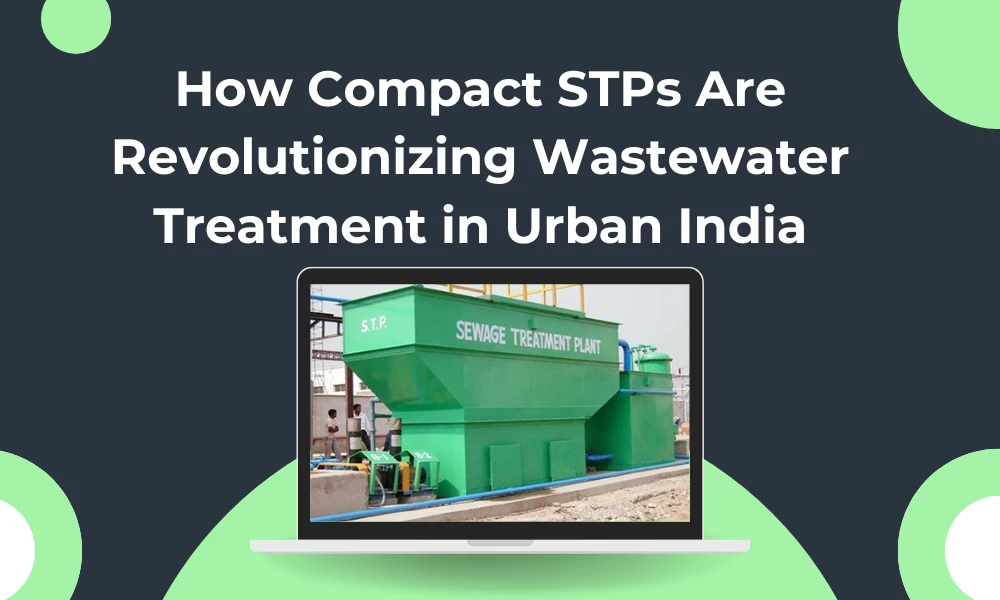
India's urbanization has been rapid, bringing with it many advantages — economic development, improved infrastructure, and higher living standards. But it has also ushered in one major crisis: wastewater management. Cities are filled with untreated sewage that contaminates rivers and damages public health. The answer? Compact Sewage Treatment Plants (STPs) — an innovative solution to sustainable urban living.
The Urban Wastewater Challenge
India produces more than 61,000 million liters of sewage every day, but merely 30% is treated. The remaining finds its way into water bodies or open spaces, causing ecological and health concerns. In highly populated cities, fitting conventional STPs is not always practical due to:
- Insufficient space
- High cost of operation
- Sophisticated infrastructure demands
- This is where compact STPs are creating a big difference.
What Is a Compact STP?
An STP is a compact, modular sewage treatment plant that occupies less space and can be installed in apartments, commercial buildings, hospitals, and small towns. Compact STPs treat domestic wastewater at the source and are perfectly suited for urban India where land availability is scarce.
Key Features:
- Low space requirements
- Minimal energy requirements
- Automated control
- Simple installation and maintenance
- Scalable, modular design
Advantages of Compact STPs in Urban India
1. Space Optimization
Compact STPs can be mounted in basements, rooftops, or narrow corners, making them ideal for high-rise buildings and gated communities.
2. Cost-Effective
Low installation and operation costs make compact STPs suitable for residential societies and small commercial establishments that can't afford big infrastructure.
3. Water Reuse
Treated water can be used for gardening, flushing, or cooling systems, and reduce freshwater demand — a critical advantage in water-scarce cities.
4. Regulatory Compliance
With government regulations (such as CPCB and MoEF guidelines) requiring STPs in buildings above specific occupancy levels, compact STPs make it easy to comply with laws.
5. Eco-Friendly
By treating sewage at the source, compact STPs avoid water pollution and promote a circular water economy.
Technology Behind Compact STPs
Advanced technologies are used in modern compact STPs, including:
- MBBR (Moving Bed Biofilm Reactor)
- SBR (Sequential Batch Reactor)
- MBR (Membrane Bio Reactor)
- These provide high treatment efficiency with low space and manual intervention requirements.
Applications Across Urban India
Apartments and Gated Communities
- Hospitals and Hotels
- Malls and Office Complexes
- Educational Institutions
- Smart Cities and Townships
Several smart city projects have already incorporated compact STPs as a fundamental part of their infrastructure.
Supporting Sustainable Development Goals (SDGs)
Compact STPs support several UN SDGs, particularly:
- SDG 6: Clean Water and Sanitation
- SDG 11: Sustainable Cities and Communities
- SDG 12: Responsible Consumption and Production
Conclusion
As urban India keeps growing, the need for efficient and sustainable wastewater management will grow stronger. Compact STPs provide a scalable, sustainable, and affordable solution that suits today's urban needs. Whether you're a resident, policymaker, or developer, investing in compact sewage treatment is not only smart — it's a necessity.
Frequently Asked Questions (FAQ)
1. What is a Compact STP?
A Compact STP (Sewage Treatment Plant) is a mini, module-based wastewater treatment system that can be installed in limited areas, particularly in urban residential complexes and commercial establishments.
2. What is the operation principle of a Compact STP?
It generally employs biological processes (such as MBBR, SBR, or MBR technology) to eliminate impurities from sewage, rendering the water appropriate for reuse or safe disposal.
3. Where can Compact STPs be installed?
They are best suited for:
- Apartments & housing societies
- Hotels & hospitals
- Commercial buildings
- Educational institutions
- Small industries
4. Is the treated water reusable?
Yes. The treated water can be reused for:
- Gardening
- Toilet flushing
- Cooling towers
- Floor cleaning
5. Are Compact STPs in accordance with Indian regulations?
Yes. Compact STPs enable buildings to meet CPCB (Central Pollution Control Board) and MoEF (Ministry of Environment and Forests) norms for wastewater treatment.
6. What is the requirement for maintenance?
Most Compact STPs are low-maintenance and semi-automated. Periodic checks and servicing ensure hassle-free operation.
7. How much is the average price of a Compact STP?
Prices depend on capacity and technology, but small residential systems usually begin from ₹2.5 lakhs to ₹10 lakhs for medium-sized buildings.